Mandarin Immersion Preschool in Phoenix: What Parents Should Look For
School: Beibei Amigos Language Preschool
Status: Approval-ready draft only. Do not publish without Maestro approval.
Suggested slug: mandarin-immersion-preschool-phoenix-guide
Primary keyword: Mandarin immersion preschool Phoenix
Search volume: Unknown. Historical Spia briefs marked this as a high-priority tour-intent topic, but no live keyword-volume pull was available during this cron run.
Word-count target: 1,200-1,500 words
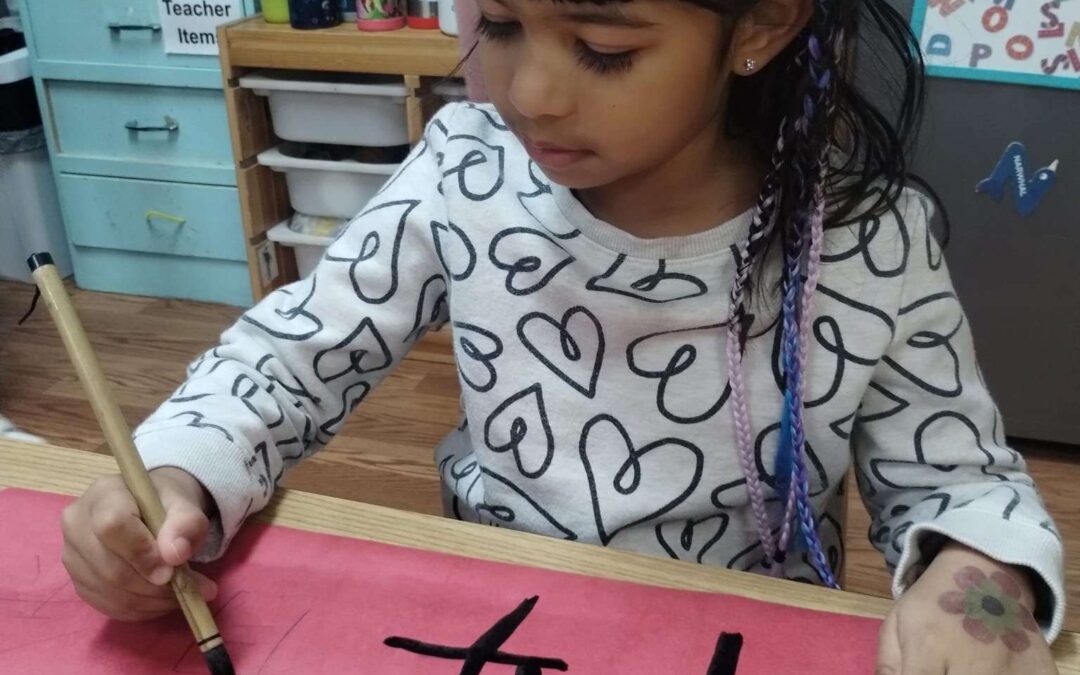
Recommended real photo: /home/cryptonovado/clawd/agents/musa/assets/beibei/raw_photos/6178d108-fbe3-4304-83e0-548dbe63b838.jpg – real Beibei child practicing Chinese brush writing.
Backup real photo: /home/cryptonovado/clawd/agents/musa/assets/beibei/raw_photos/4eca906b-3b8c-46ce-b70c-e5724dd3a68a.jpg – real Beibei teacher-led classroom group work.
Image rule: Real approved school photo only. No AI, stock, Canva AI, or unrelated classroom imagery.
Meta title: Mandarin Immersion Preschool Phoenix | Beibei Amigos
Meta description: Looking for Mandarin immersion preschool in Phoenix? Learn how Beibei Amigos teaches Mandarin through daily classroom life, songs, stories, and play.
Opening Answer
A Mandarin immersion preschool gives young children meaningful daily exposure to Mandarin during the years when language learning feels most natural. At Beibei Amigos in Phoenix, children learn Mandarin through songs, stories, classroom routines, teacher conversation, cultural activities, and hands-on work – not through isolated vocabulary drills.
For parents comparing preschool options, the most important question is not simply whether a school “offers Mandarin.” It is whether Mandarin is part of the child’s real school day, guided by teachers who know how to make a new language feel warm, understandable, and useful.
Why Mandarin Immersion Works Best Early
Young children do not learn language the same way adults do. They are listening constantly, watching faces, connecting words to routines, and testing sounds through repetition. That is why the preschool years are such a powerful time to introduce Mandarin.
In a well-run Mandarin immersion environment, children are not expected to translate or memorize. They hear Mandarin during familiar moments: greeting the teacher, choosing work, singing together, naming colors, counting materials, preparing for snack, cleaning up, and saying goodbye. The routine gives the language meaning.
This matters because Mandarin can feel intimidating to adults. The tones, characters, and writing system are different from English. Children, however, approach those differences with curiosity. When Mandarin is introduced through movement, art, music, and relationship, it becomes part of the child’s world instead of a school subject they have to “study.”
What Parents Should Look For in a Mandarin Immersion Preschool
When touring a Mandarin immersion preschool in Phoenix, listen for how the school describes the day. A strong program should be able to answer these questions clearly:
- How much Mandarin do children hear each day?
- Are teachers fluent or native Mandarin speakers?
- Is Mandarin used during ordinary classroom routines?
- Do children learn through songs, stories, art, practical life, and play?
- How does the school support children who do not speak Mandarin at home?
- How are English foundations protected while Mandarin grows?
- What do children typically understand or say after several months?
The best programs do not promise instant fluency. They promise steady, joyful exposure. They help children build comprehension first, then confidence, then spoken language.
How Beibei Amigos Teaches Mandarin
At Beibei Amigos, Mandarin is woven into the rhythm of the school day. Children hear language connected to what they are doing with their hands and bodies. A teacher may use Mandarin during morning greeting, counting, songs, calendar routines, practical classroom work, story time, and cultural activities.
This daily repetition helps children understand before they can fully respond. A child may first follow a direction, then sing a phrase, then name an object, then ask a simple question. That progression is normal and healthy.
Beibei’s Mandarin work is especially valuable because the school also honors Spanish and English. Children learn that language is not a single right answer. It is a bridge to people, culture, family, travel, and identity.
What If We Do Not Speak Mandarin at Home?
Parents do not need to speak Mandarin for their child to benefit from Mandarin immersion. In fact, many families choose immersion precisely because they want their child to receive something the home environment cannot provide on its own.
Your role at home is not to become the Mandarin teacher overnight. Your role is to be curious and encouraging. Ask your child what song they sang. Let them show you a word or gesture. Celebrate the small moments: a greeting, a color, a number, a phrase from a story.
Children are more willing to take language risks when adults respond with warmth instead of pressure.
Will Mandarin Immersion Hurt English Development?
No. A thoughtful immersion program supports the whole child, including English development. Research on bilingual and multilingual learning consistently shows that strong language experiences can support attention, flexibility, listening skills, and metalinguistic awareness – the ability to think about language itself.
In preschool, children are building foundations: vocabulary, turn-taking, storytelling, print awareness, sound patterns, and confidence speaking with adults and peers. Mandarin immersion adds another rich layer to those foundations.
The key is balance. Parents should look for a school that values English literacy readiness while also giving Mandarin enough daily presence to become real.
What Mandarin Looks Like in the Classroom
A parent walking into a Mandarin immersion classroom might see children:
- Singing a familiar song with gestures
- Counting classroom materials
- Matching spoken words to objects
- Listening to a story with picture support
- Practicing brush strokes or character-inspired art
- Following simple classroom directions
- Greeting teachers and friends
- Learning cultural traditions through food, music, holidays, and stories
These moments look simple, but they are doing deep work. A child is learning sound patterns, social confidence, memory, attention, and cultural openness.
Why Phoenix Families Choose Beibei Amigos
Beibei Amigos has served Phoenix families since 2009, giving children a language-rich preschool experience rooted in Mandarin and Spanish exposure. For families in North Phoenix, Arcadia, Scottsdale, Paradise Valley, and nearby neighborhoods, Beibei offers something hard to find: early language immersion in a school environment built specifically for young children.
Parents often choose Beibei because they want more than a traditional preschool routine. They want their child to hear other languages while the brain is still highly receptive. They want teachers who understand early childhood, not just language instruction. They want a school where culture is part of daily life.
Questions to Ask on Your Tour
Bring these questions when you visit:
How much Mandarin will my child hear each day?
Ask for concrete examples from the daily schedule.
What if my child is shy or overwhelmed?
A good immersion teacher will use gestures, repetition, visuals, songs, and relationship before expecting speech.
How do you include culture?
Look for stories, holidays, food, art, songs, and classroom materials that make Mandarin connected to real life.
How will I know my child is making progress?
Progress may begin as comprehension, participation, singing, gestures, and simple words before full sentences emerge.
Can I observe the classroom language environment?
The best answer is yes. A tour should let parents see how language actually feels in the room.
Schedule a Mandarin Immersion Tour
If you are looking for a Mandarin immersion preschool in Phoenix, the best next step is to hear the classroom for yourself. A tour lets you see how children respond, how teachers guide language naturally, and whether the environment feels like the right fit for your child.
CTA: Schedule a Mandarin immersion tour at Beibei Amigos: https://www.beibeiamigos.com/tour/
Suggested Internal Links
https://www.beibeiamigos.com/tour/– tour CTAhttps://www.beibeiamigos.com/programs/– preschool programshttps://www.beibeiamigos.com/about/– school story and philosophyhttps://www.beibeiamigos.com/mandarin-preschool-scottsdale-kierland-guide/– related Mandarin/Scottsdale guide
FAQ Schema Candidates
Is Mandarin immersion good for preschoolers?
Yes. Preschoolers learn language through routine, movement, songs, stories, and relationships, which makes early childhood an excellent time for Mandarin exposure.
Does my child need to know Mandarin before starting?
No. Immersion programs are designed for beginners. Children build comprehension through daily routines and teacher support.
Will Mandarin immersion delay English?
A balanced early language program should support English foundations while adding Mandarin exposure. Children can build strong skills across languages when instruction is developmentally appropriate.
How do I choose a Mandarin immersion preschool in Phoenix?
Look for daily Mandarin exposure, fluent teachers, child-centered methods, cultural learning, clear communication with parents, and a tour that lets you observe the classroom environment.