
Language development in children unfolds in predictable stages — from babbling (birth–6 months) to first words (around 12 months) to complex sentences by age 4–5. Strong language skills directly build memory, problem-solving, and reading readiness. Parents can support growth through daily conversation, reading aloud, play-based storytelling, and early intervention when milestones are delayed.
Language and cognitive development are crucial for a child’s early growth. Language development is the process of children learning to understand and communicate using spoken, written, or signed language. It plays a big role in shaping a child’s overall thinking abilities.
Key takeaway: In this guide, we will explore the different stages and milestones of language development in children, providing parents with valuable insights on how to support their child’s linguistic growth.
There is a strong link between language skills and overall thinking abilities in children. Language not only helps with communication but also improves memory, problem-solving skills, and social interactions. Understanding these aspects helps parents create an environment that encourages healthy language development. For example, finding affordable childcare options in Phoenix can be important for ensuring consistent exposure to language-rich environments both at home and daycare.
1. Understanding Language Development Milestones
Language development in children follows a specific path, with clear stages that show how their communication skills evolve.
1.1 Stages of Language Development
Here are the key stages of language development in children:
Prelinguistic Stage (Birth to 6 months)
In this stage:
● Infants respond to sounds by making noises like cooing and crying.
● They start recognizing familiar voices.
● They can use different cries to express different needs.
This stage is important for developing listening skills and understanding speech patterns.
Babbling Stage (6 months to 2 years)
During this stage:
● Children begin making repetitive consonant-vowel sounds such as “bababa” or “dadada.”
● This babbling behavior happens regardless of the language spoken around them.
Babbling helps children practice the motor skills required for speech and explore different sounds.
First Words Stage (Around age 2)
At this point:
● The sounds children make start turning into meaningful words.
● They often say their first recognizable words like “mama” or “dada.”
Using first words shows the start of expressive language skills, where children name things and express basic wants.
Two-Word Stage (2-3 years)
During this stage:
● Children’s vocabulary grows quickly.
● They can put two or more words together to form simple sentences like “want cookie” or “big car.”
Combining words is a major step in learning sentence structure, allowing children to express more complex thoughts and desires.
Telegraphic Stage (Around age 3)
In this stage:
● Speech becomes more like telegrams, focusing on important content words while leaving out less crucial ones.
● Common phrases include “go park” or “big dog.”
This stage shows a developing understanding of grammar and sentence structure, even if it’s not fully developed yet.
Beyond the Telegraphic Stage
As children continue to grow:
● They learn more words, including more specific vocabulary.
● Their sentences become longer and more grammatically correct.
● They can have conversations, tell stories, and follow multi-step instructions.
Mastering these skills lays the foundation for reading, writing, and academic success.
Understanding these stages helps you keep track of your child’s language development progress. Each stage builds upon the previous one, showing how language skills develop gradually over time.
1.2 Key Milestones by Age
Language development milestones are important signs of how well a child is learning to communicate. These milestones help parents and caregivers understand typical patterns in childhood language development, so they can keep track of their child’s progress and provide the right support.
By 12 Months:
● Receptive Language: Recognizes their name, understands simple commands like “no” or “come here.”
● Expressive Language: Uses sounds and gestures to communicate, may say a few words like “mama” or “dada.”
By 18 Months:
● Receptive Language: Follows simple one-step instructions, points to objects when named.
● Expressive Language: Says about 10-20 intelligible words, uses basic words to label objects and people.
By 2-3 Years:
● Receptive Language: Understands two-step directions, recognizes names of familiar people and objects.
● Expressive Language: Vocabulary expands to over 50 words, starts forming two-word sentences like “want cookie.”
By 4-5 Years:
● Receptive Language: Understands more complex instructions, identifies colors, shapes, and some letters.
● Expressive Language: Articulates most words correctly, constructs sentences with four or more words, knows over 1,000 words.
Tracking these language milestones by age helps identify any potential delays early. This proactive approach allows for timely interventions and supports healthy language development throughout early childhood.
2. Nurturing Healthy Language Skills
Creating a language-rich environment at home is crucial for fostering both receptive and expressive language skills in children. A child who feels encouraged to communicate and explore words will develop stronger communication skills, which are essential for their overall cognitive growth.
Tips for Enhancing Language Abilities
Parents can take several steps to enhance their child’s language abilities through everyday activities and interactions:
● Engage in Conversations: Talk to your child throughout the day, describing actions, objects, and events around them. This helps build vocabulary and comprehension.
● Read Together: Reading books aloud exposes children to new words and sentence structures. Ask questions about the story to stimulate conversation.
● Sing Songs: Singing nursery rhymes and songs can improve memory and introduce rhythm and patterns in language.
● Narrate Daily Activities: Explain what you are doing as you go about your daily routine. For example, “I am chopping vegetables for dinner.”
● Encourage Questions: Prompt your child to ask questions and provide detailed answers. This interaction boosts critical thinking skills.
2.1 Promoting Language Skills Through Play
Playtime is an excellent opportunity to stimulate both understanding and use of language in young children. Here are some creative play ideas that support language growth:
Role-Playing Games
Role-playing games where children pretend to be different characters help them practice dialogue and narrative skills. For instance:
● Playing ‘doctor’ allows them to learn medical terms and practice problem-solving through conversation.
● Pretending to run a ‘grocery store’ introduces vocabulary related to shopping, money, and food items.
Storytelling Activities
Encourage your child to create stories using toys or pictures:
● Use puppets or dolls to act out simple stories, prompting your child to come up with dialogues.
● Create a picture book together where your child narrates what’s happening in each illustration.
Word Games
Games that focus on word recognition and language use can be both fun and educational:
● Word Matching Games: Match words with pictures or objects. This enhances vocabulary by associating words with visual cues.
● Rhyme Time: Take turns saying words that rhyme. This helps with phonemic awareness.
Interactive Reading
Interactive reading sessions can significantly benefit language development:
● Pause while reading a book to ask open-ended questions about the plot or characters.
● Encourage your child to predict what will happen next or retell parts of the story in their own words.
By incorporating these strategies into daily routines, parents can effectively support their child’s language development, ensuring they acquire robust communication skills early on.
3. Recognizing Potential Language Delays
Signs of Language Delays
Understanding the early signs of language delays can make a significant difference in a child’s development. Common red flags that might indicate a need for further assessment include:
● Limited babbling or cooing by 6 months.
● Lack of response to sounds or their name by 12 months.
● Minimal use of gestures such as pointing or waving by 12 months.
● Absence of meaningful words by 18 months.
● Difficulty imitating sounds and actions by 2 years.
● Inability to follow simple directions by 2 years.
These indicators can be crucial in identifying potential speech and language disorders early on, ensuring timely intervention.
3.1 Assessment Tools for Monitoring Language Milestones
Parents have several resources at their disposal to track their child’s language milestones:
Standardized Checklists
Tools like the Ages and Stages Questionnaires (ASQ) and the MacArthur-Bates Communicative Development Inventories (CDI) provide structured ways to monitor progress.
Online Guides
Websites such as the CDC’s “Learn the Signs. Act Early.” offer comprehensive milestone checklists and tips for parents.
These tools are designed to help parents recognize whether their child is meeting expected developmental benchmarks, allowing them to take proactive steps if any delays are suspected.
Consulting a Speech-Language Pathologist
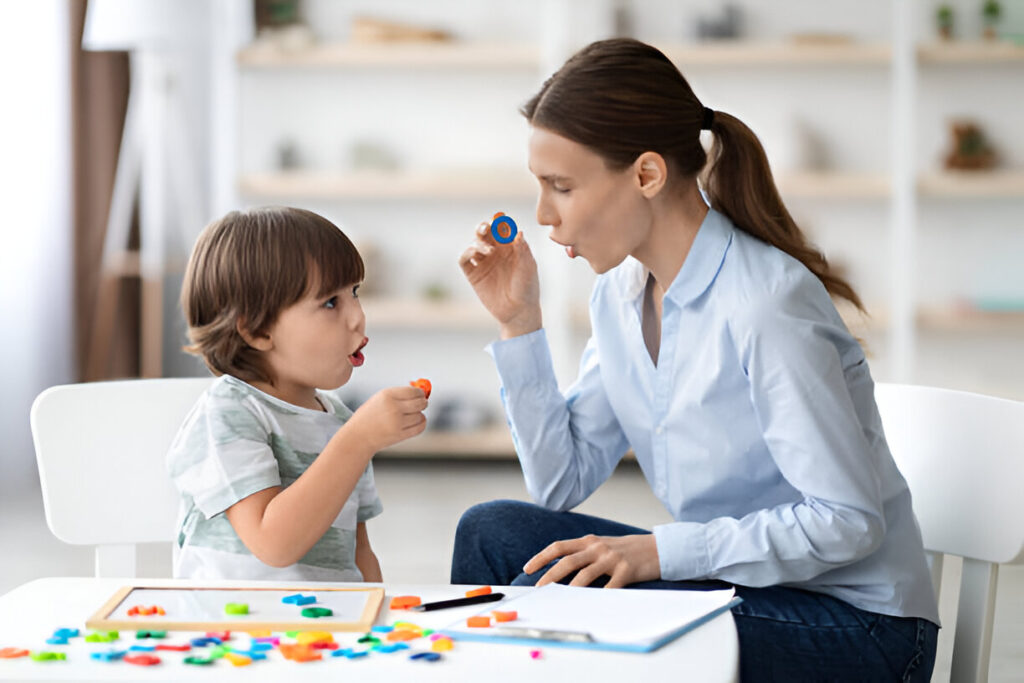
If any concerns arise while monitoring your child’s language development, consulting a speech-language pathologist (SLP) is essential. An SLP can:
1. Conduct a comprehensive evaluation to assess your child’s expressive and receptive language skills.
2. Identify specific areas of concern and recommend targeted interventions.
3. Provide guidance on activities and strategies to support your child’s language development at home.
Early consultation with an SLP can lead to better outcomes, as early intervention plays a critical role in addressing speech and language delays effectively.
4. Fostering Early Intervention
Early intervention is crucial in addressing language delays or disorders in children. Taking action early can greatly impact a child’s communication skills and overall development.
Why Early Intervention Matters
Identifying issues early allows for targeted strategies that can help prevent future challenges. For example, if a child has trouble forming words or understanding instructions, working with a speech-language pathologist can provide important support. These professionals create personalized plans to improve specific areas of need.
The Benefits of Early Intervention
There are several advantages to early intervention:
1. Enhanced Communication Skills: Children receive customized exercises and activities to improve how they express themselves and understand others.
2. Boosted Confidence: As children overcome language difficulties, their confidence grows, leading to more active participation in social situations.
3. Better Academic Performance: Stronger language skills contribute to improved reading and comprehension abilities, setting a strong foundation for success in school.
How Parents Can Help
Parents play a crucial role in supporting their child’s progress through early intervention. Here are some ways they can get involved:
1. Incorporate recommended activities into daily routines: Making these activities a regular part of the day helps reinforce what the child is learning.
2. Create an encouraging environment: Building a positive atmosphere that promotes practice and improvement can make a big difference.
3. Use everyday opportunities for learning: Reading together, having conversations, and playing interactive games are all effective ways to support language development.
The Power of Proactivity
Early intervention not only addresses immediate concerns but also sets the stage for long-term success. By taking proactive steps, parents can help their children reach their full potential when it comes to language skills.
Conclusion
Understanding language development milestones is crucial for every parent aiming to support their child’s growth. Proactive engagement in nurturing linguistic skills can significantly impact a child’s cognitive development and social-emotional well-being.
● Cognitive Growth: Language development lays the foundation for learning, problem-solving, and critical thinking. Children use language to understand concepts, follow instructions, and engage in imaginative play.
● Social-Emotional Well-Being: Effective communication helps children express their emotions, build relationships, and develop empathy. It fosters a sense of confidence and belonging.
Parents who actively participate in their child’s language journey contribute to a stronger overall developmental trajectory. Create a language-rich environment, encourage play-based learning, and monitor milestones to ensure your child reaches their full potential.
Frequently Asked Questions: Language & Cognitive Development
When should children say their first words?
Most children say their first recognizable words — like “mama” or “dada” — between 10 and 14 months. By 18 months, a typical vocabulary includes 10–20 words. By age 2, children often know 50+ words and begin forming two-word phrases. If your child hasn’t said any words by 16 months, consult your pediatrician promptly.
What are the most important language milestones to watch for?
Key milestones include: cooing and responding to sounds by 6 months; babbling by 9 months; first words by 12–14 months; two-word combinations by 24 months; and clear sentences with 4+ words by age 4. The CDC’s “Learn the Signs. Act Early.” checklist is a reliable tool for tracking these benchmarks at each well-child visit.
How does language development affect a child’s cognitive skills?
Language and thinking are deeply intertwined. Children use language internally to organize thoughts, remember information, and solve problems. Research shows that children with strong early language skills develop better working memory, higher reading comprehension, and stronger math reasoning by school age. Bilingual children gain an additional cognitive advantage — managing two language systems strengthens executive function and mental flexibility.
What are the warning signs of a language delay?
Red flags include: no babbling by 9 months; no pointing or waving by 12 months; fewer than 6–10 words by 18 months; no two-word phrases by 24 months; difficulty following simple directions by age 2; and speech that strangers cannot understand by age 3. Any of these signs warrant a referral to a speech-language pathologist (SLP) — early action leads to significantly better outcomes.
How can parents support language development at home every day?
The most effective strategies are free: talk to your child constantly, narrating daily activities. Read aloud every day, pausing to ask questions about the story. Sing songs and nursery rhymes to build phonemic awareness. Encourage imaginative play — pretend grocery stores and doctor games naturally expand vocabulary. Limit passive screen time before age 2 and prioritize two-way conversation instead.
When should I consult a speech-language pathologist?
If your child is missing two or more milestones, or if you have any concern, don’t wait. Early intervention between ages 1–3 produces the most significant gains because the brain’s language centers are rapidly developing. Your pediatrician can provide a referral, or contact your state’s Early Intervention program directly — services are often free or low-cost for children under age 3. At Beibei Amigos in Phoenix, our multilingual teachers are trained to notice early language differences and can connect families with the right resources.