
Play-based learning builds cognitive flexibility, social-emotional intelligence, language fluency, and motor coordination in children ages 2–6. Research consistently shows play-learners develop stronger problem-solving abilities, enter kindergarten more socially prepared, and form deeper intrinsic motivation than peers in rote-memorization programs. At Beibei Amigos, play-based exploration anchors our trilingual immersion curriculum from infancy through kindergarten readiness.
Understanding Play-Based Learning
Play-Based Learning is an educational approach that emphasizes the role of play in the learning process. This method integrates play into early education, allowing children to explore, discover, and learn in a hands-on manner. By combining child-initiated learning with teacher-supported activities, play-based learning creates a dynamic environment where children can thrive.
Free Play vs. Guided Play
Understanding the distinction between free play and guided play is essential for implementing effective play-based learning strategies.
Free Play
● Child-directed and voluntary
● Encourages imaginative activities without direct adult intervention
● Promotes autonomy and creativity in children
Guided Play
● Involves teacher participation to enhance learning outcomes
● Allows children to lead their play experiences while receiving subtle guidance
● Balances educational goals with children’s interests
Both types of play are crucial in fostering a well-rounded development in early childhood education. While free play nurtures independence and originality, guided play ensures that educational objectives are met without compromising the joy of discovery.
The Importance of Embracing Play-Based Learning
1. Cognitive Development
How Play Enhances Children’s Cognitive Skills
Play-based learning significantly boosts cognitive development in children. Engaging in various play activities encourages exploration and experimentation, which are crucial for developing critical thinking skills. For instance, building blocks or puzzles help children understand spatial relationships, cause-and-effect principles, and basic mathematics.
Role of Imaginative Play in Promoting Problem-Solving Abilities
Imaginative play, such as role-playing or storytelling, fosters problem-solving abilities. When children create scenarios and stories, they navigate challenges and obstacles within their imaginative worlds. This kind of play encourages flexible thinking and adaptability. For example, a child playing “store” must figure out how to manage transactions and customer interactions, enhancing their ability to solve real-world problems.
2. Social-Emotional Skills
Development of Social Skills through Playful Interactions with Peers
Play-based learning environments offer ample opportunities for children to interact with peers, helping them develop essential social skills. Activities like group games or collaborative projects teach cooperation, sharing, and negotiating roles. Children learn to communicate effectively and understand different perspectives.
Fostering Emotional Intelligence during Play Activities
Emotional intelligence is another key area where play-based learning excels. Through play, children experience a range of emotions and learn to manage them constructively. Games that require taking turns or dealing with winning and losing build resilience and empathy. These experiences contribute to a child’s ability to handle emotional challenges later in life.
3. Language Development
Enhancing Vocabulary through Play-Based Experiences
Language development thrives in a play-based setting. Interaction with peers and adults during play introduces new vocabulary words in contextually meaningful ways. For example, playing “doctor” exposes children to medical terminology while also reinforcing everyday language skills.
Promoting Communication Skills through Storytelling and Role-Play
Storytelling and role-play are particularly effective for enhancing communication skills. Children practice speaking clearly, listening actively, and understanding non-verbal cues. These activities also encourage creative expression and narrative skills, laying the groundwork for strong literacy development.
4. Motor Skills
Importance of Play for Fine and Gross Motor Skill Development
Fine motor skills develop through activities that require precision, such as drawing or manipulating small objects like beads or buttons. Gross motor skills benefit from more physical play like running, jumping, or climbing. Both types of motor skills are crucial for overall physical development.
Encouraging Physical Activity through Play-Based Learning
Physical activity is seamlessly integrated into play-based learning environments. Outdoor games like tag or structured playground activities promote physical fitness while also offering moments for social interaction and teamwork.
These sections highlight the multifaceted benefits of incorporating play into early childhood education settings.
2. Social-Emotional Skills
Development of Social Skills through Playful Interactions with Peers
Play-based learning creates ample opportunities for children to interact with their peers, fostering essential social skills. During play, children learn to share, take turns, and collaborate on tasks. These interactions help them develop a sense of empathy and understanding towards others’ feelings and perspectives. Group activities like building blocks or team sports encourage children to communicate effectively and work together to achieve common goals.
Fostering Emotional Intelligence during Play Activities
Emotional intelligence is crucial for children’s overall development. Through play, children explore a range of emotions in a safe environment. Imaginative play scenarios allow children to act out different roles and situations, helping them understand and manage their emotions. For example:
● Pretending to be a doctor or teacher helps children practice empathy and care.
● Role-playing family scenarios enables them to navigate complex social dynamics.
Educators can facilitate this by providing diverse play materials that represent various emotions and social situations. By doing so, children gain the confidence to express themselves and handle emotional challenges effectively.
Play-based learning supports both cognitive development and the growth of social-emotional skills, laying a strong foundation for holistic development in early childhood education.
3. Language Development
Language development is an important part of early childhood education, and play-based learning offers special ways to improve it. By taking part in different play activities, kids naturally learn new words and get better at expressing themselves.
Expanding Vocabulary through Play Activities
Kids come across new words and ideas while they play. Here are a few examples:
● Pretend play situations like playing “store” introduce words related to shopping, money, and items.
● Storytelling sessions let kids hear and use descriptive language, which helps them express themselves better.
The interactive nature of play encourages kids to use language in the right context, which makes it easier for them to remember and understand new words.
Building Communication Skills through Storytelling and Pretend Play
Play-based learning settings give kids many opportunities to work on their communication skills:
● Storytelling activities where kids tell stories or act out scenes help them develop narrative skills and understand how language works.
● Pretend play games require kids to communicate effectively with their friends, figuring out who will play which role and what actions they’ll take in their make-believe world.
These fun interactions not only help with language development but also support important thinking skills like problem-solving and creativity. They also encourage social-emotional skills by promoting teamwork and understanding among friends.
4. Motor Skills
Play-based learning is crucial for the development of both fine and gross motor skills in preschoolers. Through play, children naturally improve their physical abilities, which are essential for their growth and overall development.
Importance of Play for Fine and Gross Motor Skill Development
● Fine Motor Skills: Activities like drawing, building with blocks, and manipulating small objects help children develop fine motor skills. These activities improve hand-eye coordination and dexterity, essential for tasks such as writing and using utensils.
● Gross Motor Skills: Play that involves running, jumping, climbing, or dancing promotes the development of gross motor skills. This includes improvements in balance, strength, and coordination. Outdoor play is particularly beneficial as it provides ample space for these physical activities.
Encouraging Physical Activity through Play-Based Learning
Incorporating physical activity into play-based learning encourages children to move and stay active. Examples include:
● Obstacle Courses: Setting up simple obstacle courses can enhance both fine and gross motor skills. Children navigate through various challenges, improving their agility and problem-solving abilities.
● Role-Playing Games: Engaging in role-play scenarios like “playing house” or “pretend shopping” often incorporates actions such as walking, bending, or lifting, promoting physical activity while also supporting cognitive development and social-emotional skills.
● Interactive Storytelling: Stories that involve actions encourage children to act out parts of the tale, integrating physical movements with language development.
These activities not only support motor skill development but also contribute to cognitive development by fostering creativity and problem-solving. The holistic approach of play-based learning ensures that children develop a wide range of skills simultaneously.
Creating Effective Play-Based Learning Environments
Key Elements of an Effective Play-Based Learning Environment
Creating an effective play-based learning environment requires attention to several key elements:
1. Variety of Play Types: Include both free play and guided play opportunities. Free play allows children to explore their interests independently, while guided play involves educator participation to steer learning outcomes.
2. Safe and Stimulating Spaces: Ensure the environment is safe, enabling risk-taking and experimentation. Stimulating materials such as blocks, art supplies, and natural elements should be readily available.
3. Flexibility and Accessibility: Design spaces that are adaptable to different activities and accessible for all children, accommodating various needs and abilities.
Integrating Academic Content into a Playful Curriculum
Integrating academic content within a play-based curriculum can enhance learning across subjects without sacrificing the joy of play:
1. Thematic Units: Use themes (e.g., nature, space) to weave academic concepts into playful activities.
2. Learning Centers: Set up stations focusing on different subjects like math, science, or literacy, using playful materials and activities.
3. Real-Life Connections: Incorporate real-life scenarios into play to teach practical skills. For example, setting up a mock grocery store can introduce basic math concepts.
Role of the Educator in Facilitating Meaningful Play Experiences
Educators play a crucial role in facilitating meaningful play experiences:
1. Observation and Interaction: Actively observe children’s play to understand their interests and developmental needs. Engage with them by asking open-ended questions that encourage critical thinking.
2. Guidance without Interference: Support children’s explorations by providing guidance when necessary but avoid directing their actions too strictly.
3. Encouraging Peer Collaboration: Foster social interactions among peers through group activities that require teamwork and communication.
By focusing on these elements, educators can create enriching environments where children thrive through the power of play.
Practical Strategies for Implementing Play-Based Learning
Benefits of Incorporating Real-Life Experiences into Play Sessions
Real-life experiences enrich play-based learning, making it more relevant and engaging for children. Activities that mimic everyday scenarios help children make connections between their play and the world around them. For instance:
● Role-playing grocery shopping teaches children about money, counting, and healthy eating.
● Building a mini-garden enhances understanding of nature, responsibility, and the growth process.
Integrating these experiences helps bridge the gap between theoretical knowledge and practical application, deepening children’s understanding and retention.
Practical Examples of Play-Based Learning Activities for Preschoolers
Implementing play-based activities for preschoolers can be straightforward with some creative planning. Here are some effective activities to consider:
1. Sensory Bins: Fill containers with materials like rice, sand, or water combined with thematic objects (e.g., seashells for an ocean theme). Sensory bins stimulate touch, sight, and sometimes sound, fostering fine motor skills and imaginative play.
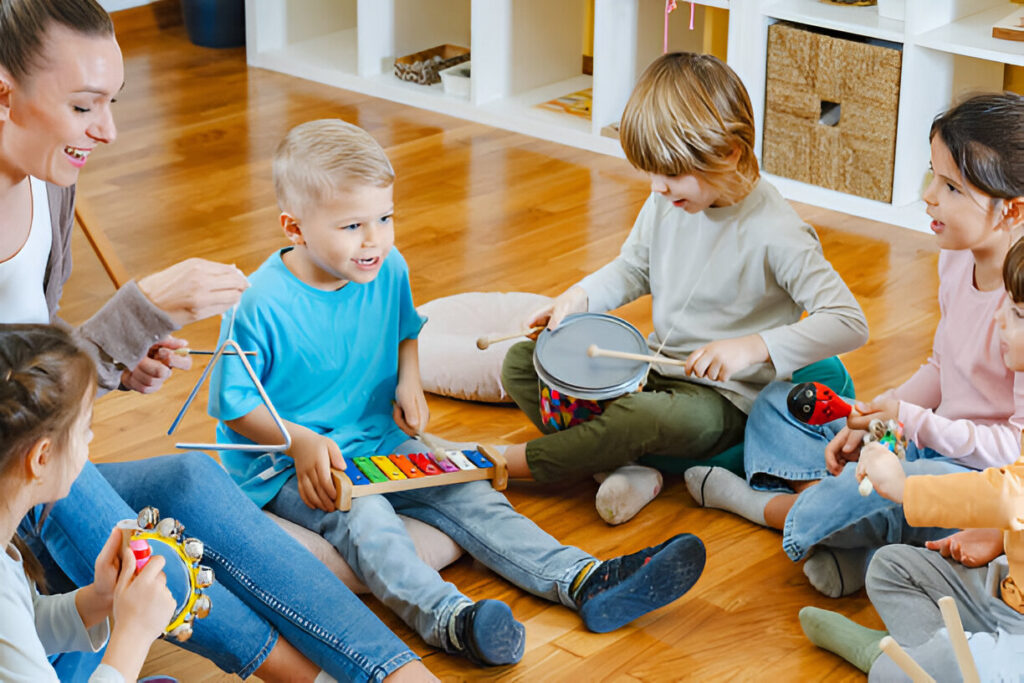
2. Storytelling Circles: Encourage children to create stories using props or picture cards. This activity boosts language skills, creativity, and social interaction as they share their narratives.
3. Art Stations: Provide various art supplies such as paints, markers, and clay. Allowing free expression through art supports cognitive development and fine motor skills while enhancing creativity.
4. Outdoor Exploration: Nature walks or scavenger hunts in the playground introduce children to observational skills and environmental awareness. Collecting leaves or identifying insects combines physical activity with scientific curiosity.
Incorporating these activities into your curriculum makes learning dynamic and enjoyable for young learners.
Addressing Challenges in Play-Based Learning Approaches
Common Obstacles Faced by Educators when Adopting a Play-Based Approach
Educators often encounter several challenges in implementing play-based learning:
1. Resistance from Traditional Education Supporters: Many educators and parents accustomed to traditional, structured educational methods may find it difficult to accept the less structured nature of play-based learning.
2. Balancing Play with Academic Requirements: Ensuring that play-based activities meet curriculum standards and educational goals can be challenging.
3. Limited Resources and Training: Schools may lack the necessary resources or professional development opportunities to effectively implement play-based learning strategies.
4. Classroom Management Concerns: Managing a classroom where children are engaged in different play activities simultaneously requires advanced organizational skills.
Strategies for Overcoming Resistance to Play-Based Learning in Schools
To tackle these obstacles, the following strategies can be employed:
1. Educate Stakeholders: Inform parents, teachers, and school administrators about the proven benefits of play-based learning through workshops, seminars, and informational materials.
2. Integrate Academic Goals with Play: Design play-based activities that align with academic standards, demonstrating that play can be both educational and enjoyable.
3. Provide Professional Development: Offer training programs focused on effective play-based learning techniques and classroom management strategies.
4. Create Collaborative Environments: Encourage teamwork among educators to share best practices and support each other in transitioning to a play-based approach.
By addressing these challenges head-on, educators can create a more accepting environment for play-based learning.
Embrace the Power of Play in Early Education
Recognizing the importance of embracing play-based learning reveals its profound impact on a child’s growth. Play-based learning offers an array of surprising benefits that extend far beyond mere enjoyment.
● Cognitive Development: Engaging in imaginative play sharpens problem-solving skills and boosts creativity.
● Social-Emotional Skills: Interaction during play fosters cooperation, empathy, and emotional resilience.
● Language Development: Storytelling and role-play sessions enhance vocabulary and communication abilities.
● Motor Skills: Activities that require physical movement improve both fine and gross motor skills.
Integrating these elements into early education settings sets a foundation for lifelong learning. Children not only develop essential academic skills but also gain a positive attitude towards learning.
Prioritizing play in early education ensures a holistic approach to development, nurturing well-rounded individuals ready to face future challenges. The role of educators and parents is crucial in creating environments where meaningful play can flourish. By supporting play-based learning, we open doors to boundless opportunities for discovery, growth, and joy in the educational journey.
Frequently Asked Questions About Play-Based Learning
What is the difference between free play and guided play in early childhood?
Free play is entirely child-initiated and unstructured — children decide what to explore, building autonomy, imagination, and creativity. Guided play involves a teacher intentionally designing the environment or scenario while still allowing the child to lead. Research from the University of Pennsylvania shows guided play produces the strongest academic gains, combining child agency with purposeful educational scaffolding.
At what age should children start play-based learning?
Play-based learning begins at birth — infants explore the world through sensory play. However, the most critical window for structured play-based education is ages 2–6, corresponding to Piaget’s preoperational stage. Programs like Beibei Amigos begin language immersion through play at age one, capitalizing on the brain’s peak neuroplasticity before age 7 when language acquisition becomes significantly harder.
Does play-based learning prepare children for kindergarten?
Yes. Multiple longitudinal studies — including the High/Scope Perry Preschool Study — show play-based preschool graduates outperform peers on kindergarten readiness assessments. They demonstrate stronger self-regulation, better listening skills, greater letter/number recognition, and fewer behavioral issues. Arizona kindergarten teachers consistently report that children from play-based programs transition more smoothly because they already know how to collaborate, follow multi-step instructions, and manage their emotions.
How does play-based learning support language development?
Dramatically. Role-play, storytelling, and peer interaction during play expose children to rich vocabulary in meaningful contexts — far more effective than flashcard drilling. Research from the American Journal of Play found that children in play-rich environments develop 30–40% larger active vocabularies by age 5. In bilingual or trilingual programs like Beibei Amigos, play in multiple languages accelerates dual-language acquisition by creating emotional associations with each language.
Can play-based learning coexist with academic standards?
Absolutely. Play-based learning doesn’t replace academic content — it delivers it more effectively. Counting blocks teaches math. Building a pretend restaurant teaches reading menus, addition, and social negotiation. Well-designed play-based curricula align directly with state early learning standards (including Arizona’s Early Learning Standards) while achieving higher engagement and retention rates than worksheet-driven approaches.
How can parents support play-based learning at home?
Create open-ended play spaces with simple materials: blocks, art supplies, sand/water trays, and dress-up clothes. Resist the urge to direct — instead, narrate what you observe (“I see you’re building a tall tower!”) and ask open-ended questions (“What would happen if you added another block?”). Limit structured screen time during play hours. At Beibei Amigos, we share weekly home play extension activities so families can reinforce classroom learning in their home language.