Cave Creek Bilingual Preschool: Is the Drive to Beibei Amigos Worth It?
If you live in Cave Creek and want a true bilingual preschool, the drive can be worth it when the school offers something your neighborhood options do not: daily Mandarin and Spanish immersion, consistent teachers, and a classroom culture that helps young children use language naturally. Beibei Amigos gives Cave Creek families a Phoenix option for early language learning before kindergarten.
For many Cave Creek parents, preschool choice starts with a practical question: How far are we willing to drive? That question matters. A beautiful program that makes every morning stressful is not the right fit for every family.
But for language immersion, the decision is slightly different. You are not only choosing a classroom for this year. You are choosing the language environment your child hears every day during the years when the brain is most open to sound, rhythm, vocabulary, and confidence.
Why Cave Creek Parents Look Beyond Their Neighborhood
Cave Creek families often have strong local preschool options. Many are warm, safe, and convenient. The challenge is that true bilingual or trilingual immersion is still uncommon.
Some programs offer language as an enrichment class once or twice a week. That can be fun, but it is not the same as hearing Spanish or Mandarin throughout the school day. Young children learn language best when it is part of real life: greetings, songs, snack time, stories, classroom routines, and play.
That is why some families search for a bilingual preschool near Cave Creek and begin comparing programs in North Phoenix, Scottsdale, Arcadia, and surrounding neighborhoods. They are looking for more than convenience. They are looking for a meaningful early advantage.
What Makes Beibei Amigos Different
Beibei Amigos is built around Mandarin and Spanish immersion for young children. The goal is not to make children memorize vocabulary lists. The goal is to help them understand and use language in context.
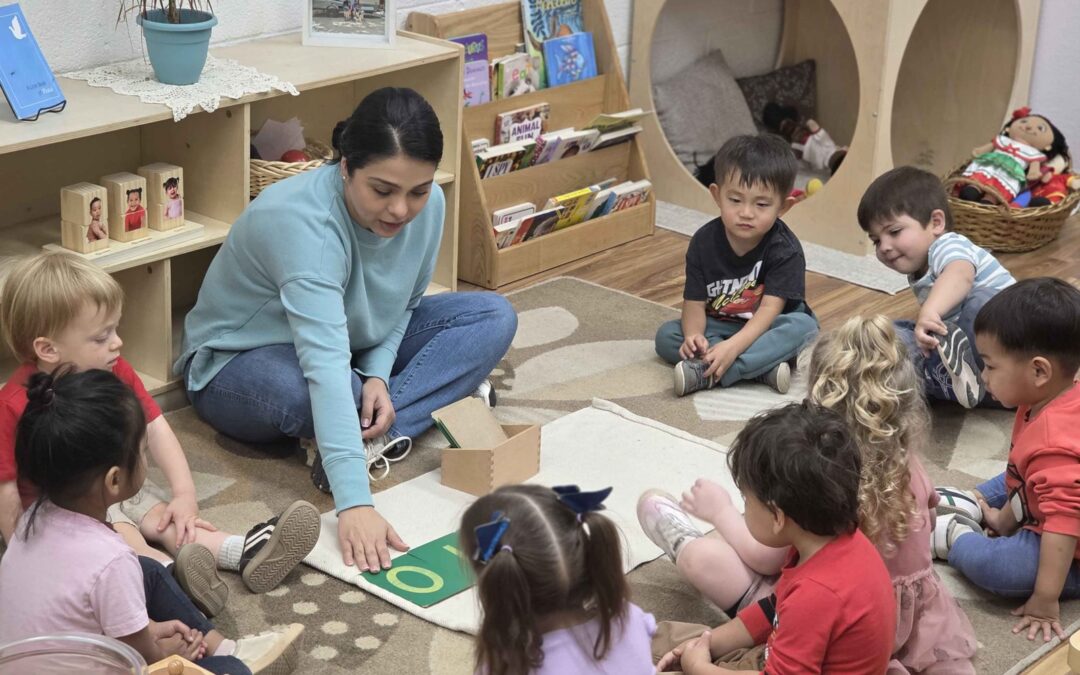
In a Beibei classroom, language is connected to movement, music, relationships, and repetition. Children hear familiar phrases many times. They watch teachers and friends respond. Over time, they begin to understand, answer, sing, count, label, negotiate, and play in another language.
That matters because preschool children are not learning language the way adults do. They are not translating in their heads. They are absorbing patterns. They learn tone, pronunciation, and meaning through the ordinary rhythm of the day.
For Cave Creek families comparing schools, this is the first question to ask: Is the language part of the daily environment, or is it an occasional activity?
Is the Commute Reasonable From Cave Creek?
The drive from Cave Creek to Beibei Amigos depends heavily on where you live, your work route, and the time of day. Families closer to Carefree Highway, Tatum, Scottsdale Road, or the 101 may experience the commute differently than families deeper into Cave Creek.
Instead of guessing, treat the tour as a commute test:
- Drive the route during your real morning drop-off window.
- Check the return route during your real pickup window.
- Ask whether drop-off and pickup routines are simple and predictable.
- Consider whether the school is near a parent work route, grandparent route, or daily errand route.
A slightly longer drive can feel manageable when it fits the family’s rhythm. A shorter drive can feel difficult if parking, pickup, or timing creates stress.
What Should Cave Creek Parents Look For on a Tour?
When you visit any bilingual preschool, look past the brochure language and observe the classroom itself.
First, listen. Are teachers using the target language naturally? Do children respond with comfort, even if they are not yet speaking in full sentences? Does language appear during transitions, songs, meals, stories, and play?
Second, watch the emotional tone. Language immersion should feel warm, not intimidating. A child who feels safe will take more language risks. A child who feels pressured may shut down.
Third, ask about teacher consistency. Immersion depends on relationships. Children learn faster when they hear familiar voices and routines every day.
Fourth, ask how new children are supported. A good immersion classroom does not expect a child to understand everything on day one. Teachers use gestures, repetition, visual cues, peer modeling, and predictable routines to help children feel successful.
Mandarin and Spanish Together: Why It Matters
Many parents search for Spanish immersion first because Spanish is widely used in Phoenix and throughout Arizona. That makes sense. Spanish has practical family, cultural, and community value.
Mandarin adds a different kind of opportunity. It introduces children to tones, characters, and cultural patterns that are very different from English. When children hear Mandarin early, they gain comfort with sounds that can be harder to distinguish later.
Together, Mandarin and Spanish create a broad language foundation. Children learn that the world can be described in more than one way. They become flexible listeners. They practice switching attention. They begin to see language as a normal part of friendship and daily life, not as a school subject reserved for older children.
For Cave Creek parents, that combination may be the reason to look beyond the closest option.
Questions to Ask Before You Decide
Bring practical questions to your tour. The best school decision usually comes from seeing the classroom and understanding the details.
Ask:
- What ages are currently served in the preschool program?
- How much Mandarin and Spanish do children hear each day?
- How do teachers help a child who is new to immersion?
- What does a typical morning look like?
- How do you communicate progress to parents?
- What kind of language growth should we expect after three months, six months, and one year?
- How does the school prepare children socially and academically for kindergarten?
- What are the current openings for my child’s age group?
These questions help you compare programs fairly. They also help you notice whether the school has a clear philosophy or only a general promise.
When the Drive Is Worth It
The drive from Cave Creek to a bilingual preschool is most likely worth it when three things are true.
First, the program offers something meaningfully different from nearby options. Daily Mandarin and Spanish immersion is a real differentiator.
Second, your child feels safe, seen, and engaged during the visit. Language learning grows from trust.
Third, the commute fits your family’s weekly life. A school should support the family, not exhaust it.
If all three are true, a longer drive may become a worthwhile investment in your child’s early years.
Plan a Visit Before You Decide
The best way to know whether Beibei Amigos is right for your Cave Creek family is to see the classroom during a normal school day. Watch how teachers speak with children. Listen for the languages. Notice whether your child becomes curious.
If you are comparing bilingual preschool options near Cave Creek, schedule a family tour at Beibei Amigos. Bring your commute questions, your language questions, and your hopes for your child’s preschool years.
Schedule my family tour: /tour/
Call Beibei Amigos: 602-996-4990
FAQ
Is Beibei Amigos close enough for Cave Creek families?
It depends on your exact location and daily route. The best test is to drive the route during your real drop-off and pickup windows, then visit the classroom to decide whether the program value justifies the commute.
Is bilingual preschool better than a weekly language class?
For young children, daily exposure usually creates a deeper language environment than a short weekly class. Children learn best when language is connected to real routines, relationships, songs, stories, and play.
What if my child has never heard Mandarin or Spanish before?
Children can enter immersion without prior language experience. A strong classroom uses repetition, gestures, visual cues, routines, and warm teacher support so children understand what is happening before they can answer in the new language.